Create an Event in Novi
Last updated: October 20, 2026
Learn how to create and configure a new event in Novi, from basic setup through ticket creation, settings, and monitoring event performance.
Events are a popular membership benefit for many associations, and they can also be a great source of revenue! Hosting your event registration in Novi gives you the added benefit of:
Linking registrations to member records in Novi
Syncing payments with QuickBooks
Limiting visibility and/or ability to purchase tickets (optional)
Selling and tracking Product Add-ons
Tracking Continuing Education Credits
Video: Setup a New Event in Novi
Here's a quick video guide to creating new events in Novi! For written steps and additional details, continue reading below.
Important Note: You cannot open registration for an event without an active ticket. Learn how to create tickets.
Create or Review Your Event Categories
Before creating a new event, check the Event Categories list to see if needed category is available or create a new event category (e.g. Signature Events, Committee Meetings, etc.). Confirm that the category is set to Active (green checkmark) to allow it to display on the frontend.
Create New Event
Event Details
1. Go to Navigation Menu > Events > Events
2. Click the Add Event button.

3. In the New Event modal that appears, add the following details (these will also appear on the Details tab):
Required Details
Title (255 character limit)
Category
Date & Time
The default time zone displayed is based on the association's time zone, not the location of the event. You can change the time zone to match the location by selecting from the Event Time Zone drop-down. Learn more: 📄 Event Time Zone
Events can be made recurring. This is best for standing events where registration is not required. Learn more: 📄 Recurring Events
Event Location
If virtual, see: 📄 Private Virtual Links for Events & Education Classes
Search Engine Optimization
Search Engine Optimization: Friendly File Name
This is the custom ending of the event URL.
Learn more: 📄 Search Engine Optimization (SEO)
Optional Details
Overview (Short Description)
Logo
Featured Image/Photo
Images added here override the default image set in Association Settings or within an event category.
Primary Details (Long Description)
Main event details and important info displayed on the frontend event page.
Secondary Details (Optional Right Side Content)
Additional details displayed to the right of the primary details.
Event Contact
Association Staff – Allows you to select a specific association staff member
Association Office – Populates association's address from Association Settings
Individual or Company Member – Select any record in database
Non-Member – Manually add information about contact
None – No contact information displayed
Post Registration (Additional Details) - This content will be displayed on the screen after the user submits their event registration. It will not be shown in any Event Emails. It will apply to all registrants, so additional information, instructions or thank you for your registration messages should be universal for all attendees.
Budgeted Attendance
Budgeted Revenue
Search Engine Optimization: Description - This is a summary of the event and will be displayed by search engines.
4. Click Save & Close.
5. Go to the Events tab and find the event. Click the Edit link to open the new event on the backend.

Important Note: New events will automatically open on the Tickets tab. Once a ticket has been created, the next time you click "Edit" it will open on the Attendees tab.
6. Create Tickets for the event
7. After creating tickets, update the display order as needed. Novi offers two options: all tickets in one section, or tickets grouped by categories. Learn more: 📄 Event Ticket Display Order
8. Go to the Details tab of the event. Most of this info was entered above in step #3, but there are additional options:
9. To add Ecommerce products to the event registration, go to the Product Add-ons tab of the event. Learn more: 📄 Product Add-ons
10. Create any promo codes for the event, go to the Promo Codes tab. Learn More: 📄 Adding and Setting Up Promo Codes
Event Settings
11. Head to the event's Settings tab to configure the event further, including Event Emails, Email Notifications, Automated Reminders, Integrations (MailChimp / Constant Contact), Event Capacity, Registration Path, Registration Options, Registration Edits, and Event Display Options.
Event Emails
Integrations
Use the toggle to sync or unsync event attendees with MailChimp or Constant Contact.
You also have optional checkboxes that allow you to:
Automatically unsync the attendee list 30 days after the event ends
Include non-attending purchasers in the synced list

Event Capacity
An Event Capacity can be set, to limit the number of seats sold overall.
There's also an option to "Show remaining availability after X% of tickets are sold".

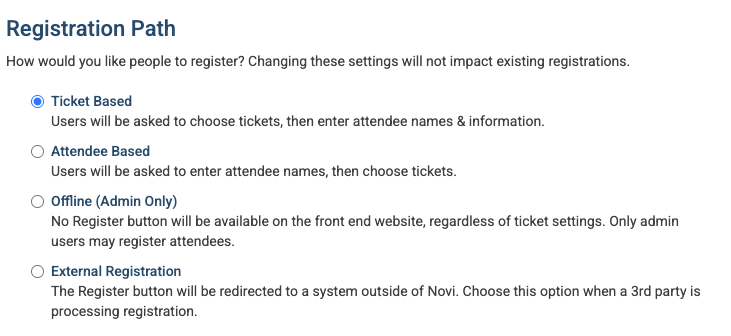
Registration Path
Choose your Registration Pathway
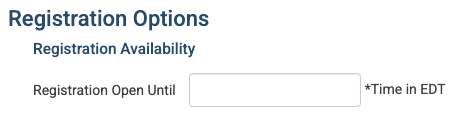
Registration Options
Set a date to close registration for your entire event. After this date, users can still see the event details page on the frontend, but the Registration button will be replaced with a message (e.g. * Registration open until 6/30/20XX at 12:00 AM EST). This message only appears when the event has a capacity set and the event is not sold out.
Update text that will appear on the attendee and tickets page of registration.
Registration Edits
Determine whether you will allow attendees to make changes to their registration for their own details or for adding the names of "TBD" placeholder attendees for this event from their Member Compass.

Event Display Options

Enter a future date for the event to be published on the frontend.
Note: Events will stop showing on the frontend calendar once the End Time has passed - this is based on the day and time, not just the day. For example, an event that ends on November 19 at 5:00 pm will no longer show on the calendar at 5:01 pm.
Check the box to Hide on frontend calendar. This means the event will not be displayed on the events calendar or list view. To invite members to register for a hidden event, send them the direct link for the event's details page. To get the link, click "View on Frontend" and copy the URL from your browser or copy and paste the Register link under the Settings tab.
Visibility of events can be...
Public
Only accessible to logged in members with benefits, or
Locked down to specific Groups or Committees. If this option is selected, the event will only appear to these segments in the following places:
Events List
Events Calendar
Homepage Top Featured
Homepage Slider
Homepage Upcoming Events
If needed, add an Override Link for the event details page.
12. Now that all of the settings have been dialed in and the tickets have been created, click the View on Frontend link.
Tip: We recommend formatting the event description/details on the frontend. Learn more about formatting content.
13. Head to the Notes tab to add any internal only notes to an event with content editor functionality. Bonus - these notes are available in custom event reports!

Be sure to Save!
14. Once the event is ready to go live, don't forget to switch the event to Active. Do this on the backend from the top right of the event or from the main Event list
15. Review the event from the frontend one more time, using a mobile device to see if there are any formatting issues.
16. You're all set! Now you can start sending marketing communications for the event!